X-Men characters: The complete guide to Marvel’s most important mutants
by Marvel Lunatics · June 24, 2026
In September 1963, Stan Lee and Jack Kirby introduced five teenagers and a teacher in a wheelchair. The X-Men #1 gave us Professor X, Cyclops, Marvel Girl, Beast, Iceman and Angel, plus the man who would define them by opposing them: Magneto. Sixty-three years later, the team has had hundreds of members, dozens of spin-offs and a film franchise that ran for two decades before Marvel Studios got the rights back.
So who are the X-Men characters you actually need to know? Start with three groups. The founders: Professor X, Cyclops, Jean Grey, Beast, Iceman and Angel. The 1975 relaunch, which brought in Wolverine, Storm, Nightcrawler and Colossus. And the rogues’ gallery, led by Magneto and Mystique, with a long list of villains who sometimes switch sides. Add Rogue, Gambit, Kitty Pryde, Jubilee, Psylocke and Emma Frost, and you can follow almost any X-Men story ever told.
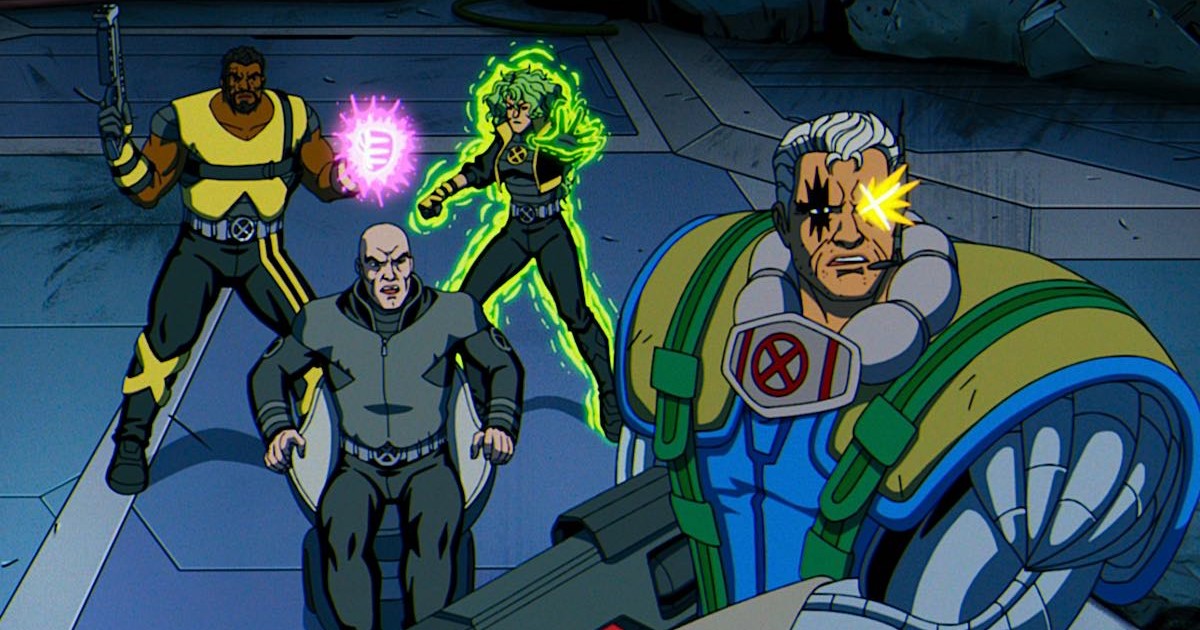
This guide walks through all of them: who they are, what they can do, and when they first showed up. With X-Men ‘97 season 2 arriving on Disney+ on July 1 and the original movie mutants returning in Avengers: Doomsday this December, there’s never been a better time to learn the roster.
Key takeaways
- The original X-Men debuted in The X-Men #1 in September 1963, created by Stan Lee and Jack Kirby.
- Giant-Size X-Men #1 in 1975 relaunched the team with Storm, Nightcrawler, Colossus and Wolverine, and turned the X-Men into Marvel’s biggest franchise.
- Many of the most beloved X-Men started as villains, including Rogue, Emma Frost and, at times, Magneto himself.
- Six actors from Fox’s X-Men films are confirmed for Avengers: Doomsday, which opens on December 18, 2026.
- X-Men ‘97 season 2 premieres on Disney+ on July 1, 2026, with three episodes at once.
Why are there so many X-Men characters?
Because the X-Men were never just a team. They’re a school, a nation, a family and a civil rights metaphor, all at once. Every generation of writers added new students, new teachers and new enemies, and almost nobody ever left for good.
That’s wonderful if you’ve been reading for decades. It’s overwhelming if you’re new. Ask any newer fan and the same questions come up. Is Cable Cyclops’ son? (Yes.) Is Nightcrawler related to Mystique? (Yes, and it got more complicated recently.) Why are there two Phoenixes? (Long story.) The X-Men’s family tree looks more like a subway map.
The movies didn’t make it simpler. Fox’s X-Men films ran from 2000 to 2020, with two different casts playing many of the same characters, plus Deadpool and Logan on the side. Then Marvel Studios started bringing mutants into the MCU one by one. Kamala Khan was revealed as a mutant in Ms. Marvel. Namor was called one in Black Panther: Wakanda Forever. Kelsey Grammer’s Beast popped up in a post-credits scene in The Marvels. And Hugh Jackman put the yellow suit on at last in Deadpool & Wolverine.
So the honest answer to “who are the X-Men?” is: it depends which version you’re watching. The good news is that the core cast barely changes. Learn the thirty or so characters below and you’ll recognize almost everyone, whether you’re reading the comics, watching the cartoons or sitting in a theater in December.
Who were the original X-Men?
The first lineup came straight out of The X-Men #1 (September 1963). Charles Xavier gathered young mutants at his school in Westchester, New York, to teach them to control their powers and protect a world that feared them.
| Character | Real name | Powers | First appearance |
|---|---|---|---|
| Professor X | Charles Xavier | The world’s most powerful telepath; founder of the X-Men | The X-Men #1 (1963) |
| Cyclops | Scott Summers | Concussive optic blasts he can only control with ruby quartz lenses | The X-Men #1 (1963) |
| Jean Grey | Jean Grey | Telepathy and telekinesis; later host of the Phoenix Force | The X-Men #1 (1963) |
| Beast | Hank McCoy | Superhuman agility and strength, plus a genius-level intellect | The X-Men #1 (1963) |
| Iceman | Bobby Drake | Creates and becomes ice; one of the strongest mutants alive | The X-Men #1 (1963) |
| Angel / Archangel | Warren Worthington III | Feathered wings; later razor-sharp metal wings as Archangel | The X-Men #1 (1963) |
Professor X
Charles Xavier is the dreamer at the center of everything. His vision of peaceful coexistence between humans and mutants is the X-Men’s mission statement. In the comics, he’s also a deeply flawed man who keeps secrets from his own students. Patrick Stewart played him across the Fox films and as an alternate version in Doctor Strange in the Multiverse of Madness, and he’s back for Avengers: Doomsday.
Cyclops
Scott Summers is the field leader, the soldier and, for many fans, the most underrated X-Man. He can’t switch off his optic blasts, so he lives behind a visor. His family is a story in itself: his brother is Havok, his son is Cable, and his relationship with Jean Grey drives some of the biggest X-Men stories ever written. James Marsden returns to the role in Doomsday.
Jean Grey
Jean started as Marvel Girl and became the Phoenix, one of the most powerful beings in the Marvel Universe. The Dark Phoenix Saga, which ran through X-Men #129 to #138 in 1980, is still the story most people mean when they say “the best X-Men comic.” Fox adapted it twice, in X-Men: The Last Stand and Dark Phoenix, with mixed results.
Beast
Hank McCoy is the team’s scientist, poet and bruiser. He started out looking mostly human with big hands and feet, and only later turned blue and furry. Kelsey Grammer played him in X-Men: The Last Stand and returned in the post-credits scene of The Marvels, which made him one of the first Fox mutants to cross into the MCU.
Iceman and Angel
Bobby Drake is the team’s joker with a ridiculous power ceiling, while Warren Worthington III is the rich kid with wings. Angel’s transformation into Archangel, after Apocalypse gave him metal wings, is one of the darkest turns in the franchise.
Who joined the X-Men in Giant-Size X-Men #1?
By the early 1970s, X-Men was mostly reprinting old stories. Then, in 1975, writer Len Wein and artist Dave Cockrum launched Giant-Size X-Men #1 with a new, international team. Chris Claremont took over the writing soon after and stayed for sixteen years. This is the era that made the X-Men famous.
| Character | Real name | Powers | First appearance |
|---|---|---|---|
| Wolverine | Logan (James Howlett) | Healing factor, adamantium skeleton and claws | The Incredible Hulk #180–181 (1974) |
| Storm | Ororo Munroe | Controls the weather | Giant-Size X-Men #1 (1975) |
| Nightcrawler | Kurt Wagner | Teleportation, wall-crawling and acrobatics | Giant-Size X-Men #1 (1975) |
| Colossus | Piotr Rasputin | Turns his body into organic steel | Giant-Size X-Men #1 (1975) |
| Thunderbird | John Proudstar | Superhuman strength, speed and stamina | Giant-Size X-Men #1 (1975) |
| Banshee | Sean Cassidy | Sonic scream that also lets him fly | The X-Men #28 (1967) |
| Sunfire | Shiro Yoshida | Absorbs solar energy and projects plasma | The X-Men #64 (1970) |
Wolverine
Logan is the X-Man everybody knows, even people who’ve never read a comic. He actually debuted fighting the Hulk before joining the team, and he spent decades as Marvel’s most popular character. We dug into his history, from Weapon X to Logan, in our Wolverine character guide.
Storm
Ororo Munroe is a weather goddess, a former thief from Cairo and one of the best leaders the X-Men have ever had. She famously beat Cyclops for leadership of the team without using her powers. Our Storm profile covers why she’s one of Marvel’s most important heroines.
Nightcrawler and Colossus
Kurt Wagner looks like a demon and has the gentlest heart on the team. He’s also Mystique’s son, which the comics have revisited more than once. Piotr Rasputin is the farm boy from Siberia who turns into steel and throws Wolverine at people in the famous “Fastball Special.” Alan Cumming, who played Nightcrawler in X2, is confirmed for Doomsday.
Thunderbird
John Proudstar is a reminder that the new team came with real stakes. He died on only his second mission, in X-Men #95, one of the first times a superhero team lost a member for good.
Which X-Men characters became fan favorites later?
The Claremont years and the 1990s added the characters who made the X-Men a household name, especially through X-Men: The Animated Series, which ran on Fox Kids from 1992 to 1997.
| Character | Powers | First appearance |
|---|---|---|
| Rogue | Absorbs memories, powers and life force through touch | Avengers Annual #10 (1981) |
| Gambit | Charges objects with kinetic energy | 1990, Uncanny X-Men |
| Kitty Pryde / Shadowcat | Phases through solid objects | X-Men #129 (1980) |
| Jubilee | Fires explosive energy “fireworks” | Uncanny X-Men #244 (1989) |
| Psylocke | Telepathy and psychic blades | Captain Britain #8 (1976) |
| Emma Frost | Telepathy and a diamond form | X-Men #129 (1980) |
| Cable | Telekinesis, telepathy and a future soldier’s arsenal | 1990, The New Mutants |
| Bishop | Absorbs energy and fires it back | Uncanny X-Men #282 (1991) |
| Havok | Absorbs cosmic energy and releases plasma blasts | The X-Men #54 (1969) |
| Polaris | Controls magnetism | The X-Men #49 (1968) |
| Forge | Intuitively invents any machine | Uncanny X-Men #184 (1984) |
| Magik | Sorcery, teleportation discs and the Soulsword | Giant-Size X-Men #1 (1975) |
| Dazzler | Converts sound into light | X-Men #130 (1980) |
Rogue
Rogue may be the clearest proof that X-Men villains make the best X-Men. She debuted as a member of Mystique’s Brotherhood and joined the team after accidentally absorbing Carol Danvers’ powers and memories. Her inability to touch anyone made her the emotional core of the 1990s cartoon, and she’s a big part of X-Men ‘97.
Gambit
Remy LeBeau is the Cajun thief with a bo staff, a trench coat and a deck of exploding cards. He’s mostly been a comics and cartoon hero, since his Fox film never got made. Channing Tatum, who spent years trying to make that movie, finally played him in Deadpool & Wolverine and is confirmed for Doomsday.
Kitty Pryde and Emma Frost
Kitty arrived as a 13-year-old computer genius and grew into one of the team’s leaders. Emma Frost debuted in the very same issue, X-Men #129, as the White Queen of the villainous Hellfire Club. Two decades later, she was running the school alongside Cyclops.
Cable, Bishop and Havok
The early 1990s loved soldiers from the future, and Cable and Bishop are the two you need to know. Cable is Cyclops’ son, sent into the future as a baby and returned as a grizzled warrior. Havok, Cyclops’ younger brother, has led the X-Men more than once.
Who are the biggest X-Men villains?
Here’s where the X-Men really stand out. Their villains aren’t just obstacles. Many of them believe they’re right, and some of them have a point.
| Villain | Who they are | First appearance |
|---|---|---|
| Magneto | Master of magnetism and Holocaust survivor who fights for mutant supremacy | The X-Men #1 (1963) |
| Mystique | Shapeshifter, Brotherhood leader and mother of Nightcrawler | Ms. Marvel #16 (1978) |
| Sabretooth | Feral killer and Wolverine’s oldest enemy | Iron Fist #14 (1977) |
| Juggernaut | Xavier’s stepbrother, powered by a mystical gem | The X-Men #12 (1965) |
| Sentinels | Mutant-hunting robots built by Bolivar Trask | The X-Men #14 (1965) |
| Apocalypse | The first mutant, believer in survival of the fittest | X-Factor #5 (1986) |
| Mister Sinister | Geneticist obsessed with the Summers bloodline | Uncanny X-Men #221 (1987) |
| Sebastian Shaw | Leader of the Hellfire Club who absorbs kinetic energy | X-Men #129 (1980) |
| Toad and Blob | Founding members of the Brotherhood of Evil Mutants | The X-Men #3–4 (1964) |
| Bastion | Human-Sentinel hybrid behind Operation: Zero Tolerance | 1996 |
Magneto
Erik Lehnsherr is the most important villain in X-Men history and sometimes not a villain at all. He survived Auschwitz, decided humanity would never accept mutants and chose force over Xavier’s patience. He even led the X-Men for a while after Xavier left. Our Magneto deep dive traces how he went from cackling bad guy to tragic antihero. Ian McKellen returns as Magneto in Avengers: Doomsday.
Mystique
Raven Darkhölme can become anyone, which makes her the perfect spy and the most unpredictable figure in the franchise. According to Wikipedia’s character history, she was created by Chris Claremont and Dave Cockrum and debuted in Ms. Marvel #16 in 1978. She’s Nightcrawler’s parent, Rogue’s adoptive mother and the mother of the mutant-hating Graydon Creed. Rebecca Romijn and Jennifer Lawrence both played her in the Fox films, and Romijn is confirmed for Doomsday. We also included her in our look at Marvel’s antiheroes.
Apocalypse and Mister Sinister
En Sabah Nur is the ancient mutant who believes only the strong should survive. Mister Sinister is the Victorian scientist who cloned Jean Grey and manipulated the Summers family for decades. X-Men ‘97 season 1 leaned heavily on Sinister, and the new season is expected to bring in Apocalypse.
Sentinels and Bastion
The Sentinels are the X-Men’s oldest nightmare: giant robots built to hunt mutants. Bastion, a human-Sentinel hybrid, made them personal in the late 1990s. If you watched X-Men ‘97 season 1, you’ve seen exactly how devastating a Sentinel attack can be.
What’s the best way to understand the X-Men?
Here’s the idea we keep coming back to whenever someone new asks us about the X-Men. We call it the Three Doors.
Almost every X-Men character walks in through one of three doors. The school door is for the students Xavier recruited and trained: Cyclops, Jean, Kitty, Jubilee. The rescue door is for the outsiders the team found and brought home: Storm, Nightcrawler, Wolverine, Gambit. And the enemy door is for those who started on the other side: Rogue, Emma Frost, Magneto, even Juggernaut for a while.
Knowing which door a character came through tells you how they’ll behave. School-door characters believe in Xavier’s dream, sometimes to a fault. Rescue-door characters are loyal to the people, not the mission. Enemy-door characters understand the Brotherhood’s arguments because they used to make them.
That’s also why the X-Men work so well on screen. Every argument between Xavier and Magneto plays out inside the team, too. Cyclops and Wolverine fight over Jean, but they also fight over whether the X-Men should be teachers or soldiers. Once you see the three doors, the subway map turns into a story.
How can you get to know the X-Men characters?
If you want to go from “who’s that?” to recognizing every mutant on screen, here’s the route we’d recommend.
-
Watch X-Men: The Animated Series first. The 1992 cartoon introduces the core roster in its most iconic form: Cyclops, Jean, Wolverine, Storm, Rogue, Gambit, Beast and Jubilee. It’s on Disney+ and it still holds up.
-
Catch up on X-Men ‘97 season 1 before July 1. Season 2 premieres on Disney+ on July 1, 2026, with three episodes at once. Season 1 is ten episodes, so you can watch it in a weekend. Our X-Men ‘97 review explains why it was such a big hit.
-
Read Giant-Size X-Men #1 and The Dark Phoenix Saga. These are the two stories that made the modern X-Men. The first introduces the new team, and X-Men #129 to #138 tells Jean Grey’s defining story. Our list of the best Marvel comics for new fans includes another essential X-Men read, God Loves, Man Kills.
-
Rewatch the Fox movies that matter for Doomsday. X-Men (2000), X2 (2003) and X-Men: The Last Stand (2006) star the cast that’s returning in December: Patrick Stewart, Ian McKellen, James Marsden, Rebecca Romijn, Alan Cumming and Kelsey Grammer.
-
Add Deadpool & Wolverine. It’s the bridge between the Fox mutants and the MCU, and it gives Gambit his long-awaited debut. If you need a refresher on the Merc with a Mouth himself, try our Deadpool deep dive.
-
Pick one character and follow them. Don’t try to read everything. Choose Storm, Rogue or Cyclops, and follow their solo stories and big team events. You’ll meet the rest of the cast naturally along the way.
Frequently asked questions
Who are the main X-Men characters?
The main X-Men characters are Professor X, Cyclops, Jean Grey, Wolverine, Storm, Beast, Iceman, Rogue, Gambit, Nightcrawler, Colossus and Kitty Pryde. Magneto and Mystique are the most important villains. Together, these characters appear in almost every major X-Men comic, cartoon and film, so learning them first makes everything else easier to follow.
Who was the first X-Men team?
The first X-Men team appeared in The X-Men #1 in September 1963, created by Stan Lee and Jack Kirby. It included Cyclops, Marvel Girl (Jean Grey), Beast, Iceman and Angel, led by Professor Charles Xavier. Magneto debuted in the same issue as their first enemy.
Is Wolverine an original X-Man?
No. Wolverine wasn’t part of the original 1963 team. He first appeared in The Incredible Hulk #180 and #181 in 1974 and joined the X-Men in Giant-Size X-Men #1 in 1975, alongside Storm, Nightcrawler and Colossus. He became the team’s most popular member only after Chris Claremont took over the series.
Which X-Men characters are in Avengers: Doomsday?
Marvel confirmed Patrick Stewart as Professor X, Ian McKellen as Magneto, James Marsden as Cyclops, Rebecca Romijn as Mystique, Alan Cumming as Nightcrawler and Kelsey Grammer as Beast during a livestream on March 26, 2025. Channing Tatum also returns as Gambit. Avengers: Doomsday opens on December 18, 2026.
What is the difference between the X-Men and the Avengers?
The Avengers are a team of heroes who choose to fight threats the world celebrates them for stopping. The X-Men are mutants born with their powers, protecting a world that fears and hates them. That’s why X-Men stories focus on prejudice, belonging and family, while Avengers stories lean toward world-ending threats.
Welcome to the school
Back in 1963, the X-Men were five kids in a mansion who didn’t fit in anywhere else. Every character in this guide, from Storm to Gambit to Magneto, has a version of that same story. That’s why fans keep coming back: everybody has felt like an outsider at some point.
You don’t need to memorize every member to love the X-Men. Start with the founders, meet the 1975 team, learn which villains have a point, and pay attention to which door each character walked through. By the time X-Men ‘97 returns in July and the original movie cast steps back into the light in December, you’ll know exactly who everyone is.
To me, my X-Men. The school is open.
Keep reading
- Wolverine: the indestructible X-Man: Logan’s history, from Weapon X to the MCU.
- Storm: Marvel’s icon of power and resilience: the weather goddess who led the X-Men.
- The complex legacy of Magneto: how the X-Men’s greatest villain became their ally.
- X-Men ‘97 review: why the revival series won over old and new fans.
- Marvel X-Men ‘97 action figures: the toys that bring the animated team to your shelf.
Marvel Lunatics is a fan blog that has covered the Marvel Universe since 2024, with reviews, character profiles and viewing guides for Marvel movies, Disney+ series, games and comics. This guide was published on June 24, 2026, ahead of the X-Men ’97 season 2 premiere.
Tags: Beast Cyclops Gambit Jean Grey Magneto Marvel Comics Mutants Mystique Nightcrawler Professor X Rogue Storm Wolverine X-Men X-Men '97